Workshops & Lectures

Better Together offers workshops and lectures in person or virtually, designed to fit your program's needs from grand rounds and chalk talks to interactive half-day workshops.

“Reviving the Healer was exactly the talk we needed to reinvigorate our research community – cannot thank you enough!”
– K-Club Director, Emory University
“This was such a useful session! Their willingness and vulnerability in each coaching/receiving coaching on REAL (not scripted/safe) life things was incredibly powerful.”
– Medical Student Faculty Coach, Yale University
“Incredible Talk. Our community of GME Program Directors, Deans, Program Administrators / Coordinators, and Education Leaders very much appreciate you sharing your expertise which will surely strengthen our educators’ knowledge of topics that impact learner development.”
– Vice Chair for Education, Oregon Health and Sciences University
“The Psychological Safety presentation was truly outstanding; so engaging and fun. The ideas are great. This should be required training for all faculty, so practical and relatable.”
– Neonatology Division Chair, University of Colorado

Each session is grounded in evidence-based coaching science and built for the realities of clinical education.

Here is a list of current topics that may be delivered as either a workshop or lecture:

Burnout often lives in the stories we tell ourselves. This session reconnects physicians to their “why” and offers concrete skills to rebuild agency from the inside out.
  • Identify and understand an overactive inner critic as the cause of imposter syndrome
  • Practice three agency-building skills: cognitive reframing, perfectionism management, and absorbing praise
  • Translate the feedback to “be more confident” into actionable, values-aligned behavior change
Fear shuts down learning. This session gives medical educators a practical, research-backed toolkit for building the conditions where trainees can take risks, ask questions, and grow, without the cost of silence.
  • Define psychological safety and articulate why it is foundational to effective medical training
  • Identify behaviors and teaching patterns that undermine psychological safety in clinical environments
  • Apply at three practical tools to create and repair lost psychological safety in your teaching setting
Not all guilt is the same. This coaching-informed session helps clinicians tell the difference between true guilt (a signal worth heeding) and pseudo-guilt (the fear of disappointing others) and teaches how to set clear, values-aligned boundaries without apology or resentment.
  • Differentiate true guilt from pseudo-guilt and recognize the triggers for each
  • Use a values-based gut check to navigate situations where two competing priorities conflict
  • Set and honor boundaries in ways that preserve connection rather than breed resentment
Impostor syndrome isn’t a personality flaw — it’s an overactive inner critic, and it responds to skill-building. Participants leave with three evidence-based tools for reframing, managing perfectionism, and finally letting compliments land.
  • Identify the inner critic as the root mechanism driving impostor syndrome
  • Practice three targeted skills: metacognition, perfectionism management, and absorbing praise
  • Delineate Imposter Phenomenon from the Intruder Paradox, and manage both with empowerment
There’s a difference between task confidence (I’ve done this well before) and self-confidence (I trust myself no matter the outcome). This session uses metacognition to help participants cultivate the deeper kind — including the liberating skill of failing on purpose.
  • Distinguish task confidence from self-confidence and understand why the difference matters
  • Use metacognitive strategies to generate believable thoughts that produce genuine feelings of confidence
  • Practice intentional failure as a skill-building tool for long-term resilience and self-trust
When clinicians and learners feel controlled, they comply. When they feel autonomous, they grow. This session translates Self-Determination Theory into practical teaching moves: autonomy-supportive questions, learner-set goals, and strengths-based feedback that actually changes behavior.
  • Distinguish controlled from autonomous motivation and predict their downstream effects on learning and wellbeing
  • Apply three autonomy-supportive teaching moves in clinical teaching encounters
  • Deliver strengths-based feedback that targets optimal challenge and documents growth toward competence
Feedback fails when defenses get in the way. This session equips educators and trainees to stay open when receiving hard truths, give courageous and bias-checked feedback, and use coaching tools to support learners who’ve been triggered by criticism.
  • Recognize and manage your own defensive responses to stay open to critical feedback
  • Apply a courageous feedback checklist that addresses bias and ensures readiness to give helpful feedback
  • Use a metacognitive coaching tool to support learners who have been activated by critical feedback

Empathy alone isn’t enough for change. This session teaches educators how to use the coaching hat, distinct from mentoring, counseling, or advocacy, to help learners who’ve experienced bias or microaggressions move from pain to agency, equipped to show up as their best selves.

  • Define coaching and differentiate it from other educator roles in the context of bias and microaggressions
  • Understand the benefits and pitfalls of using a coaching approach in DEI-related conversations
  • Practice a coaching tool that empowers learners to move from a place of pain to self-directed action
Teacher. Mentor. Supervisor. Advocate. Friend. Coach. You wear them all, but not always the right one at the right moment. This session maps the educator’s many roles, defines coaching as its own distinct skill set, and gives participants tools to move between hats with intention.
  • Name the core roles of a medical educator and identify the benefits and pitfalls of each
  • Define coaching and distinguish it clearly from teaching, mentoring, and advising
  • Practice tools for holding effective coaching conversations with learners in clinical settings

Presentations

The Better Together team offers evidence-based presentations and interactive workshops focused on physician well-being, professional fulfillment, coaching, medical education, and creating more humane learning and working environments. Sessions can be tailored to faculty, trainees, researchers, healthcare teams, and institutional leaders.

grand rounds

60 minutes
Our Grand Rounds presentations combine current evidence, compelling stories, and practical strategies to address some of the most pressing challenges facing healthcare professionals today. These sessions are designed to inspire reflection, challenge assumptions, and provide actionable insights that participants can immediately apply to their work and lives.

workshop

1-4 hours
Our workshops move beyond awareness to skill-building. Through experiential exercises, facilitated discussion, coaching-based approaches, and practical tools, participants develop new ways of thinking and responding to common professional challenges. Workshops can be customized to focus on individual well-being, leadership development, team culture, or educational excellence.

Small Group Presentation

1-2 hours
Designed for deeper engagement and meaningful conversation, small group sessions create space for participants to explore challenges, share experiences, and learn from one another in a psychologically safe environment. These highly interactive sessions often incorporate coaching principles, guided reflection, and facilitated discussion tailored to the group’s goals.

Meet the Founders of Better Together

Our Co-Directors are both experts in their medical fields and extensively trained in professional coaching.

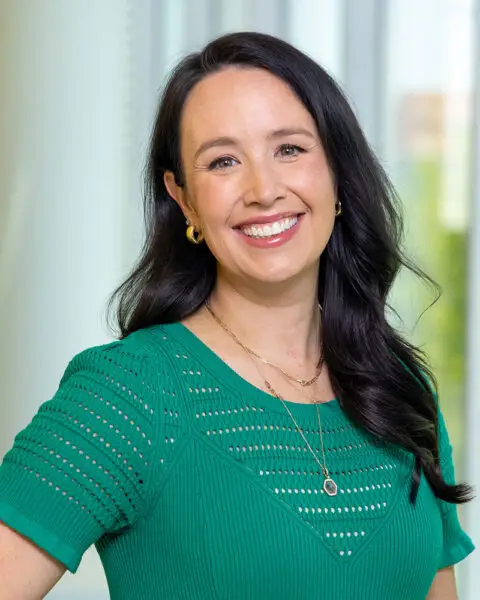
Dr. Adrienne Mann

Adrienne Mann is an Associate Professor of Medicine at the University of Colorado where she works clinically as a Hospitalist at the Rocky Mountain Regional VA Medical Center and serves as Core Faculty for wellbeing and coaching for the CU Internal Medicine Residency Program. She has scholarship interest in developing and studying innovations to support and improve wellbeing in trainees and faculty. She is Co-Director of Better Together Coaching, and her purpose is to support individuals in developing and living into their own definitions of success.

Dr. Tyra Fainstad

Tyra Fainstad is an Associate Professor of Medicine at the University of Colorado where she is a primary care doctor and Resident Clinic Director and Core Faculty for Internal Medicine trainees. She has a scholarship interest in learner-centered feedback, assessment bias, and psychologically safe educational environments. She is also a certified professional coach and co-director of Better Together Coaching. She is a recovering approval addict, on a never-ending path to self-awareness. Her purpose now is to create space for change through helping doctors and trainees access inner drive and agency using Self Determination Theory.

Recent Engagements

Recent Engagements

Bring BT to Speak:

1

Submit the form to bring BT to your institution

Fill out the form below to connect someone from our team with the appropriate contact from your institution.

2

Coordinate with our team to finalize the workshop or lecture

Choose the topic and presentation format that is the best match for your attendees and objectives.

3

Schedule the date and invite your attendees

Once the details are finalized we’ll secure a date and the event can be promoted within your organization.